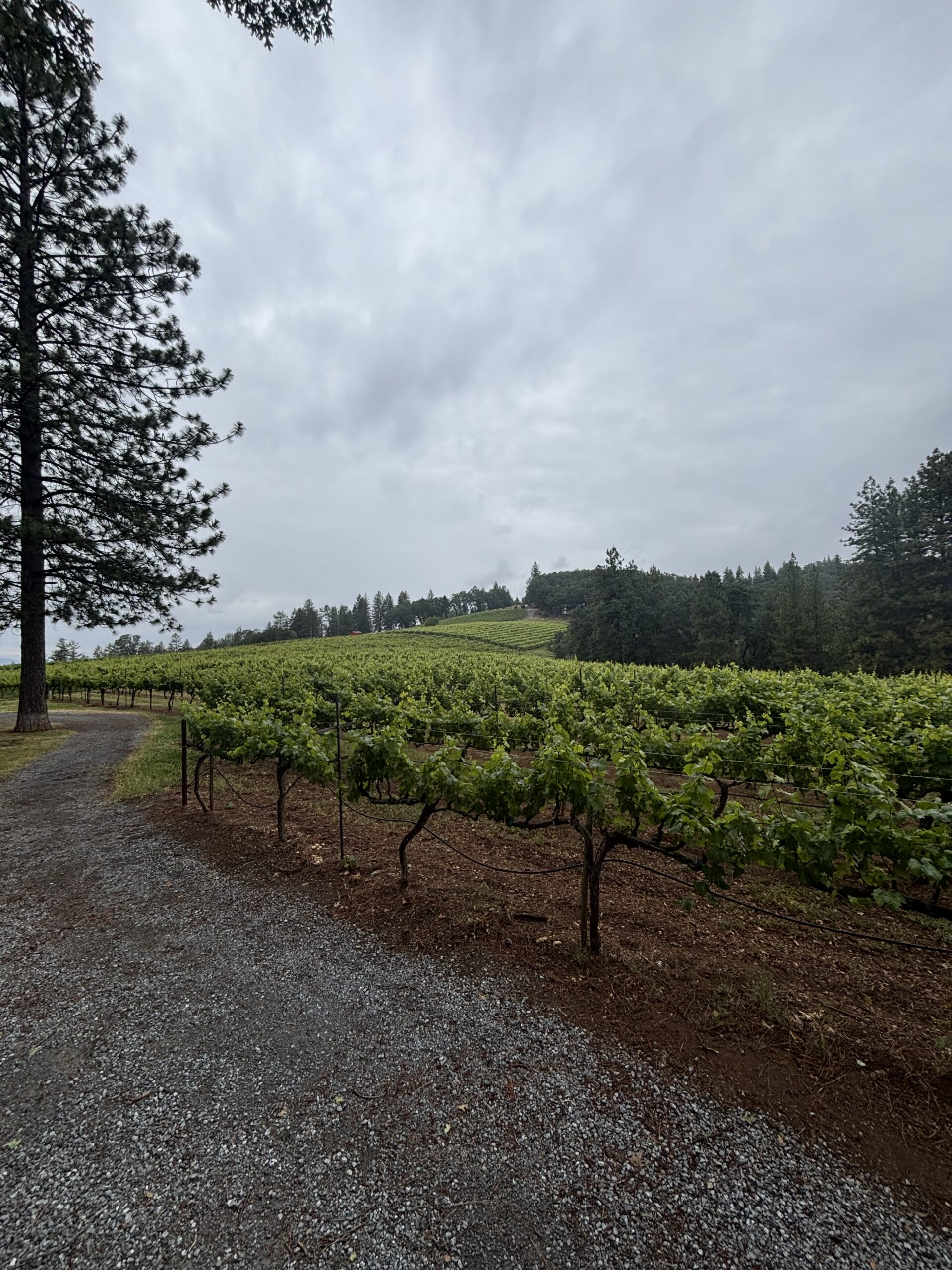
May is a vibrant month in the vineyards with bright green new growth bursting from the vines. The vines are at the developmental stage where they are producing shoots, leaves, and small clusters that will eventually become grapes. The warm days and cool spring nights allow for ideal growing conditions at this point of the season. This spring has given us many spring showers with constantly providing water for the soil and the vines. Unfortunately, the grape vines aren’t the only plants growing like crazy this time of year. As the stewards of our great vineyards, we look at farming our vineyards from all encompassing view, and part of this is the management of cover crops in between the rows, and the removal of non-native noxious weeds, that are thriving this time of year primarily Yellow Starthistle. We have been working diligently to remove Yellow Starthistle from our vineyards, and it has become an ongoing battle. The Yellow Starthistle weed is one of the most aggressive and persistent noxious weeds that we have in the state, and the country where it has spread to 41 of the 48 contiguous states. The best way to control the starthistle is to not let it go to flower and spread its seeds. This can be achieved through mowing or weed eating, with the thought process being that every you that you don’t allow the plant to reseed you will gradually control and reduce the population. This has been affective for us, but in a year like this where the growing conditions are ideal it’s a persistent task to keep up with it. We have been continuously mowing the vineyards for most all of the month of May, and will probably have to continue mowing into June and July. It will all be worth it when the weed is finally irradicated from our vineyards, and our intentional cover crop will take over, in-between the vineyard rows.
Winery News
Weed Control and Mowing